A precision mold manufacturer spent a large sum to introduce a five-axis CNC machining center with a nominal positioning accuracy of 0.01 mm, yet the actual form and position tolerances of the molds often exceeded specification by 0.02–0.03 mm. The machine tool manufacturer’s engineer came to debug twice and concluded “the machine tool itself is fine; it is environmental vibration interference.” The business owner was confused: the workshop floor is C30 concrete, hard enough; and the machine was installed with secondary grouting and firmly fixed. Where was the problem? A later workshop vibration test revealed: the plant is adjacent to a municipal road, and vehicle vibration from the uneven road surface travels into the workshop through the foundation; combined with vibration interference from adjacent equipment inside the workshop, the machine table of the precision machine remained in a state of micro-vibration during precision machining, so machining accuracy naturally could not be guaranteed. This is a very common but easily overlooked problem in the precision manufacturing field: when precision machining accuracy is not up to standard, the machine tool itself accounts for only 20% of the causes — 80% is environmental vibration at work.
The biggest difference between a precision manufacturing workshop and an ordinary industrial workshop lies in the extreme sensitivity of the word “precision” to environmental vibration. For a five-axis machining center with 0.01 mm positioning accuracy, if the workshop vibration amplitude exceeds 0.001 mm (1 μm), machining accuracy drops noticeably. But the problem of workshop vibration is not “whether it exists,” but “how big it is” — most factory managers do not know the vibration level of their own workshop, nor what that level means for precision machining. The first step to solving this problem is to conduct a workshop vibration test, quantify the vibration spectrum and amplitude, and then determine the isolation solution accordingly. LeadTop has specialized in precision vibration isolation for over a decade and has accumulated rich experience in precision manufacturing workshop isolation, providing precision machining enterprises with full-process services of vibration testing, solution design, product selection, and construction acceptance. LeadTop’s product line covers all precision manufacturing scenarios: ZDT series air-float isolation platforms (for precision machine tools), LVH series active isolation modules (for precision inspection equipment), VCM series active isolation strips (for existing workshop retrofits), and POT series solid-state isolators (for standard machine tools).
The vibration sources in a precision manufacturing workshop are far more complex than those in a lab, often resulting from the superposition of multiple vibrations. Identifying the vibration sources is the first step in designing an isolation solution:
|
Vibration Source |
Vibration Frequency Band |
Propagation Path |
Impact on Precision Machining |
Typical Case |
|
Traffic vibration |
0.5–20 Hz (road) |
Foundation soil propagation |
Slow low-frequency vibration; produces ripples when machining arcs/curved surfaces |
Plant adjacent to a municipal road |
|
Equipment vibration |
5–100 Hz (adjacent machines) |
Floor structure propagation |
Periodic vibration; machining marks on the surface |
Workshop with multiple densely arranged machines |
|
Personnel movement |
2–10 Hz |
Floor slab propagation (multi-story plants) |
Transient low-frequency impact; machining dimension drift |
Precision machining area on the second floor or above |
|
Air conditioning/air compressor |
10–200 Hz |
Floor slab/piping propagation |
Continuous mid-to-high-frequency vibration; increased surface roughness |
Factory with a large air compressor station |
Identification suggestion: vibration sources in a workshop are often superimposed from multiple sources, and a single measure (such as only adding isolation pads to the machine) often cannot completely solve the problem. LeadTop recommends first conducting vibration source identification testing (spectrum analysis) to clarify the contribution ratio of each vibration source, then developing a targeted isolation solution.
The isolation requirements of precision manufacturing equipment vary enormously — from ordinary milling (accuracy 0.05 mm) to ultra-precision turning (accuracy 0.001 mm), the requirements on vibration amplitude differ by 50 times. Selection must be based on the machining accuracy target:
|
Machining Type |
Accuracy Level |
Allowable Vibration Amplitude |
Typical Equipment |
Recommended Isolation Solution |
|
Ordinary milling/turning |
0.05–0.1 mm |
<0.01 mm |
Ordinary CNC machine tools |
POT series solid-state isolators |
|
Precision milling/grinding |
0.01–0.05 mm |
<0.002 mm |
Precision machining centers |
ZDT series air-float isolation platforms |
|
Ultra-precision machining |
0.001–0.01 mm |
<0.0005 mm |
Ultra-precision lathes/grinders |
LVH series active isolation modules |
|
Precision inspection/measurement |
Related to measurement accuracy |
<0.0002 mm |
CMM, laser interferometers |
LVH series active isolation + independent foundation |
Selection suggestion: when choosing an isolation solution, do not only look at the equipment type — look more at the actual machining accuracy target. Even for the same CNC machining center, the isolation solutions for machining precision molds (0.01 mm) and ordinary parts (0.1 mm) are completely different. LeadTop can provide vibration testing and accuracy assessment services, quantify the actual vibration level of your workshop, and give precise isolation solution recommendations against the machining accuracy requirements.
The isolation requirements of precision inspection equipment are often higher than those of machining equipment — inspection is the “judge”; if inspection itself is disturbed by vibration, the results are not objective. Coordinate measuring machines (CMM) and laser interferometers are among the inspection equipment most sensitive to vibration.
Vibration sensitivity characteristics of precision inspection equipment:
Recommended LeadTop isolation solutions for precision inspection equipment:
For CMM isolation, the LeadTop ZDT series air-float isolation platform or LVH series active isolation module is recommended. The ZDT-B air-float isolation platform (natural frequency 1.0–1.5 Hz, 99% isolation efficiency above 10 Hz) can meet the isolation needs of most CMMs and is easy to install. For high-end CMMs (accuracy ≤0.001 mm), the LVH series active isolation module (natural frequency ≤1.5 Hz, ≤−30 dB at 0.5–20 Hz) is recommended for better low-frequency vibration isolation.
For laser interferometer isolation, the LeadTop LVH series active isolation module or an independent isolation optical platform is recommended. The LVH series active isolation module (response time ≤8 ms) can offset environmental low-frequency vibration interference in real time, and is especially suitable for use with high-precision laser interferometers. The LeadTop optical platform tabletop (MOT series, flatness 0.05–0.1 mm/m², deformation <2 μm/m²) can serve as a stable worktable for laser interferometers.
The biggest difficulty in precision manufacturing workshop isolation retrofit is often not the isolation solution itself, but that “the workshop is still in production and the equipment cannot be stopped.” This is the essential difference between factory isolation retrofit and lab retrofit — a lab can coordinate research schedules, but workshop downtime means output loss.
Three particularities of workshop retrofit:
First, the equipment cannot be shut down: factory workshops are production facilities, so isolation retrofit must be carried out in the gaps between equipment operation, with a short construction window (usually 4–8 hours each time). LeadTop can provide modular construction solutions, splitting the retrofit project into multiple short-cycle construction phases, with each construction requiring only a brief shutdown (2–4 hours) without affecting the overall production schedule.
Second, vibration propagation paths are complex: the workshop floor is often integrally cast reinforced concrete, and vibration propagates within the slab, affecting a far larger range than in a lab. The isolation solution needs to consider overall vibration control rather than focusing only on a single piece of equipment. LeadTop provides workshop overall vibration assessment services, quantifying vibration propagation paths and developing systematic isolation solutions.
Third, subsequent operation and maintenance requirements are high: workshop equipment usage intensity is far higher than lab equipment, and isolation equipment works under high-load, high-frequency vibration environments for long periods, requiring higher reliability. LeadTop’s industrial-grade product line is designed for factory high-intensity use environments, with an MTBF (mean time between failures) significantly higher than laboratory-grade products.
Retrofit solution recommendations:
For existing workshops with poor vibration environments, LeadTop recommends the VCM series active isolation strips as the first choice for retrofit — modular design, no need to move equipment during installation, short construction windows, and minimal retrofit workload. The VCM series has a natural frequency ≤1.5 Hz, effectively isolating the traffic vibration and equipment vibration common in workshops and meeting the isolation needs of most precision machining.
For factories with independent inspection rooms or precision assembly areas, the ZDT series air-float isolation platform is a better solution — higher isolation performance, and the pneumatic leveling function compensates for uneven settlement of the workshop floor, providing good long-term stability.
Workshop Isolation Retrofit of a Precision Mold Manufacturer in Suzhou
The enterprise is engaged in precision plastic mold manufacturing, equipped with 2 five-axis machining centers (positioning accuracy 0.01 mm) and 1 CMM (accuracy 0.002 mm). The workshop is located in an industrial park, adjacent to a municipal road with frequent heavy vehicle traffic.
Enterprise feedback: the out-of-tolerance rate of mold machining was about 15%, CMM measurement repeatability was poor, and measurement data did not match the machine tool machining data, causing endless “finger-pointing” between the two sides. After on-site vibration testing by the LeadTop technical team: the workshop floor vibration peak was 0.004 mm (4 μm), concentrated in the 5–15 Hz band, far exceeding the allowable threshold for precision machining (0.001 mm).
LeadTop’s retrofit solution: 2 five-axis machining centers were equipped with LeadTop ZDT-B air-float isolation platforms (natural frequency 1.0–1.5 Hz, 99% isolation efficiency above 10 Hz, pneumatic auto-leveling ±10 mm), and 1 CMM was equipped with an LVH series active isolation module (natural frequency ≤1.5 Hz, ≤−30 dB at 0.5–20 Hz). Construction was arranged during night-shift downtime, 4 hours each time, completed in 3 phases, and production was not affected during the retrofit of all equipment.
Retrofit results: the mold machining out-of-tolerance rate dropped from 15% to below 2%, CMM measurement repeatability improved significantly, and measurement data became consistent with the machine tool machining data. According to the enterprise’s production manager: “Previously machining and inspection could never match up; now it has finally settled down. LeadTop’s construction arrangement was also very flexible and did not delay our deliveries at all.”
|
Solution Type |
Representative Product |
Isolation Frequency Band |
Isolation Efficiency |
Applicable Equipment |
Workshop Retrofit Friendliness |
|
Solid-state isolation |
LeadTop POT series |
4–12 Hz |
Basic |
Ordinary CNC machine tools |
Extremely high (zero workload) |
|
Air-float isolation |
LeadTop ZDT-B series |
1.0–1.5 Hz, 99% above 10 Hz |
Excellent |
Precision machining centers, CMM |
High (air source needed, surface-mounted piping) |
|
Active isolation |
LeadTop VCM series |
≤1.5 Hz, ≤8 ms response |
Excellent |
Precision machining, precision inspection |
Extremely high (modular, short construction cycle) |
|
Active isolation |
LeadTop LVH series |
≤1.5 Hz, ≤−30 dB at 0.5–20 Hz |
Outstanding |
Ultra-precision machining/inspection, high-end CMM |
Medium (structural assessment needed) |
LeadTop summary: the core of precision manufacturing workshop isolation retrofit is “vibration quantification + accuracy matching” — first test the vibration spectrum and amplitude, determine the allowable vibration threshold against the machining accuracy target, then match the corresponding isolation solution. The particularity of workshop retrofit is that “the equipment cannot be shut down,” and modular, short-cycle construction is the key to landing the retrofit.
Q1: Does workshop vibration testing require professional equipment? Can I use a phone APP to measure it?
A: Phone APPs (such as accelerometer-type applications) can measure vibration trends, but their accuracy is far from sufficient to support precision manufacturing isolation solution design — the resolution of a phone accelerometer is usually in the 0.01–0.1 mm range, while the allowable vibration for precision machining can be as low as 0.0002 mm (0.2 μm), a difference of 50–500 times. LeadTop provides professional vibration testing services, using high-precision acceleration sensors (resolution up to the 0.00001 mm level) and spectrum analyzers to obtain quantitative vibration data as the scientific basis for isolation solution design.
Q2: For CNC machine tools already in use in the workshop, do they need to be re-commissioned after adding an isolation platform?
A: Usually not. After the isolation platform is installed, the machine’s installation datum (levelness, anchor bolt preload) needs to be re-confirmed, but the CNC system’s parameter settings and compensation data usually do not need adjustment. If the isolation platform height differs greatly from the original foundation height, tool length compensation parameters may need adjustment. LeadTop engineers complete all commissioning and confirmation work during installation.
Q3: Can an isolation solution solve the vibration generated by multiple equipment running simultaneously?
A: Yes, but a systematic mindset is needed. Simply adding isolation pads to a single piece of equipment can only solve the problem of “the equipment’s own vibration,” not the problem of “vibration propagation between equipment.” LeadTop recommends: first, identify the vibration propagation paths (which equipment are vibration sources and which are vibration-sensitive equipment); second, block the vibration on the propagation path (add isolation to vibration-source equipment, or strengthen isolation for vibration-sensitive equipment); finally, if necessary, carry out overall workshop vibration control (independent isolation foundations). LeadTop can provide workshop vibration propagation path analysis services and develop systematic isolation solutions.
Q4: Can precision inspection equipment and machining equipment share one isolation solution?
A: No. The vibration sensitivity of precision inspection equipment (CMM, laser interferometer) is usually 1–2 orders of magnitude higher than that of precision machining equipment, and the isolation requirements of the two are completely different. For example: a precision machining center may only need air-float isolation (natural frequency 1.0–1.5 Hz), but the supporting CMM may need active isolation (natural frequency ≤1.5 Hz, response ≤8 ms). It is recommended to plan the inspection area separately and use a higher-level isolation solution.
Q5: What is the approximate budget for a workshop isolation retrofit?
A: It depends on the number of equipment, accuracy requirements, and site conditions. Basic retrofits (equipping ordinary CNC machine tools with POT series solid-state isolators) cost several thousand yuan per unit. Medium retrofits (equipping precision machining centers with ZDT series air-float isolation platforms) cost tens of thousands of yuan per unit. High-precision retrofits (equipping high-end CMMs with LVH series active isolation modules) cost more than one hundred thousand yuan per unit. LeadTop can provide free on-site assessment and accurate quotes.
Has your factory workshop ever encountered machining accuracy not meeting standards? Feel free to share your experience in the comments. If you are selecting an isolation solution for precision equipment in your workshop, you can also privately message LeadTop for vibration testing and solution consulting services.
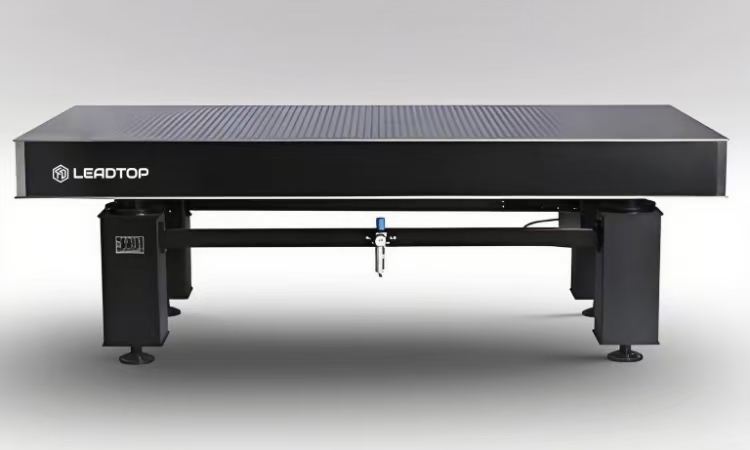
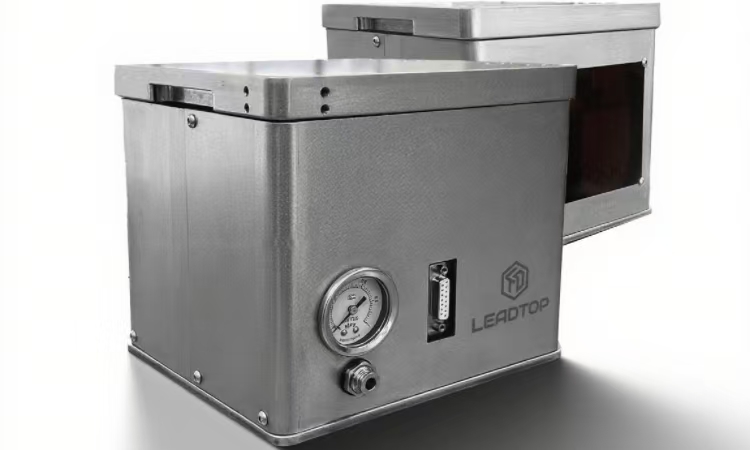
LeadTop service interface: LeadTop provides full-process services of vibration testing, isolation solution design, product selection recommendations, and construction acceptance for precision manufacturing workshops. Service products cover the POT series (solid-state isolators), ZDT series (air-float isolation platforms), VCM series (active isolation strips), LVH series (active isolation modules), and MOT series (optical platform tabletops). Service hotline: 0791-88224425, email: sales@opticaltable.cn. If you need a customized isolation solution for your workshop, feel free to message us.
Data source: compiled based on LeadTop precision manufacturing workshop isolation retrofit cases (n=95, 2022.01–2025.06).


