Over the past three years, the number of new precision laboratories at universities has grown rapidly — surging demand in quantum science, neuroscience, micro-nano manufacturing, and advanced optics has driven a large volume of optical platform procurement.
But the reality is: a considerable proportion of laboratories find at acceptance that they "bought the wrong" optical platform.
Not because they bought a poor-quality product, but because the selection logic was flawed — spending money that should not have been spent on over-specification, or cutting corners that planted long-term hidden risks.
A laboratory researching fiber-optic quantum communication purchased an active isolation optical platform from an imported brand, with a total price exceeding 800,000 RMB. The laboratory is on the third floor of a university teaching building, with no heavy machinery vibration sources nearby — on-site testing found that the laboratory’s background vibration level above 5 Hz was already lower than the VC-C standard. In other words: the active isolation platform they bought has barely played any role.
The true value of active isolation platforms lies in countering complex, strong, broadband vibration environments:
Whereas in most cases, university laboratories:
For VC-B and quieter environments, passive isolation platforms (pneumatic or rubber) are completely sufficient.
|
Environmental Background Vibration |
Equipment Vibration Sensitivity |
Recommended Product |
|
VC-B and quieter (teaching building) |
Low (optical microscope) |
POT-G series |
|
VC-B and quieter |
Medium (white-light interferometry) |
ZDT-P series |
|
VC-B borderline or locally exceeding |
Medium-high (precision optics) |
ZDT-B series |
|
VC-C borderline (high-rise / near traffic) |
High (AFM, quantum optics) |
TA series |
|
VC-D/E (factory / subway-adjacent) |
Ultra-high (TEM / advanced inspection) |
VCM/LVH series |
Recommendation: conduct an on-site vibration test before procurement to determine the actual vibration level before deciding on the isolation solution. LeadTop offers a free on-site preliminary vibration testing service.
A university purchased a pneumatic isolation table with impressive parameters (natural frequency 1 Hz), but in actual use found that the laser interference fringes still had slight jitter; after prolonged operation, visible warping of the table surface appeared; and the microscope field of view showed periodic drift.
Investigation found that the isolator selection was fine — the problem was insufficient surface plate rigidity: they used an ordinary aluminum honeycomb plate, but their experiments required a high-rigidity, high-flatness granite surface plate.
|
Layer |
Function |
Common Materials |
Corresponding Parameters |
|
Isolation layer (bottom) |
Attenuate ground vibration |
Rubber / pneumatic / active actuators |
Natural frequency, isolation efficiency |
|
Support structure layer (middle) |
Provide load-bearing and height adjustment |
Steel frame / aluminum profile |
Stiffness, stability |
|
Surface plate (top) |
Support experimental equipment |
Honeycomb aluminum / granite / ceramic |
Flatness, rigidity, roughness |
The parameters of the three layers must match — no matter how good the isolator is, if the surface plate rigidity is insufficient, vibration will still be amplified.
|
Experiment Type |
Recommended Surface Plate Material |
Key Parameters |
Compatible Product |
|
General optical experiments |
Honeycomb aluminum |
Flatness 0.05–0.1 mm/m² |
MOT-F + POT-P |
|
Precision optics (laser interferometry) |
High-rigidity honeycomb aluminum + constrained layer |
Deformation < 2 μm/m² |
MOT-H + ZDT-B |
|
Ultra-precision (AFM / near-field optics) |
Granite or ceramic |
Low thermal expansion coefficient, extremely high rigidity |
Custom required, contact LeadTop |
|
Mobile / on-vehicle scenarios |
High-strength steel structure |
Impact resistant, three-level protection |
POT-C on-vehicle type |
A laboratory purchased a pneumatic isolation platform and directly had the equipment manufacturer place the instruments on it and start using it. A week later, they found the platform was "drifting" slightly — the pneumatic height was not leveled and the airbag pressure was wrong.
Commissioning of pneumatic isolation platforms is a severely underestimated step.
Pneumatic isolation platforms lift the surface by inflating airbags. If the air pressure of the four (or six) support points is inconsistent, the surface will tilt, affecting the reference plane of the optical system. LeadTop’s ZDT-B / ZDT-P series support pneumatic auto-leveling with a ±10 mm adjustment range, completed within 30 seconds — but the factory default parameters are for the no-load state; re-leveling is required after full loading.
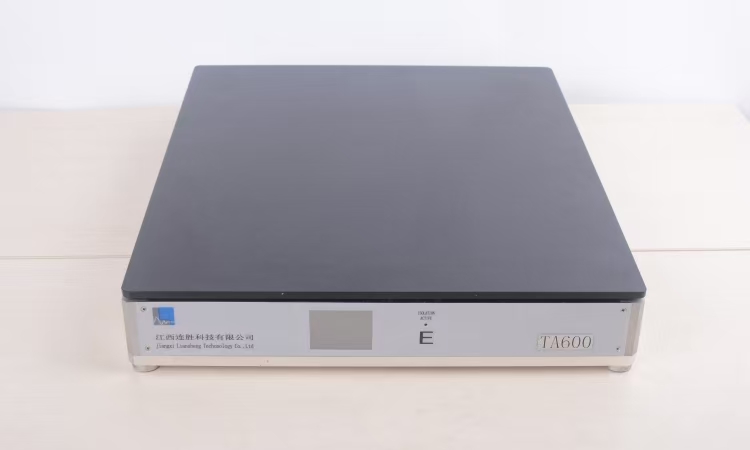
Airbag pressure must match the load: too low a pressure causes the surface to sink and reduces rigidity; too high a pressure raises the surface and degrades high-frequency vibration suppression. The TA series (TA400/TA600/TA800) is designed with displacement sensing + pneumatic actuators, automatically completing load matching within 30 seconds.
After installation, it is recommended to use vibration sensors to measure the vibration level of the platform surface and compare it with the original ground vibration, to verify whether the isolation efficiency reaches the design value (usually ≥ 90% attenuation).
LeadTop provides installation and commissioning services; engineers complete the three acceptance items — leveling, load matching, and transmissibility testing — on site and issue a test report.
Yes, but it should be confirmed at the selection stage.

|
Principle |
Recommendation |
|
Test the environment first, then decide the solution |
Spend ¥3,000–8,000 on a vibration test — stop "buying overpriced by experience" |
|
Isolator + surface plate must match |
No matter how good the isolator parameters are, insufficient surface plate rigidity makes it a wasted purchase |
|
Commissioning and acceptance cannot be skipped |
Pneumatic platforms must complete leveling + transmissibility acceptance; keep the test reports |
|
Reserve expansion space |
Prioritize modular design (VCM) to avoid replacing the platform in the future |
POT-G Hollow Conical Isolation Platform
ZDT-B Pneumatic Pendulum Platform
TA Active Isolation Table
VCM Active Isolation Strips


