


Optical Table Supply
Welding Optical Table for Stable Breadboard and Measurement Setups
This welded optical table is positioned for buyers who need a rigid support platform for laboratory instruments, photonics workstations, industrial measurement assemblies, and long-duration alignment tasks. The visible product details focus on vibration damping, structural stability, and practical setup control rather than decorative configuration.
Teams comparing Optical breadboard manufacturers usually need clear answers on platform structure, leveling control, maintenance load, and fit with custom instrument footprints. This page brings those points together in a format that supports internal technical review before RFQ submission.
For sourcing groups evaluating a welding optical table manufacturer, the published configuration highlights a high-density honeycomb core, sealed top surface, manual leveling adjustment, optional castors, and the ability to discuss custom-sized table layouts for project-specific optical stations.
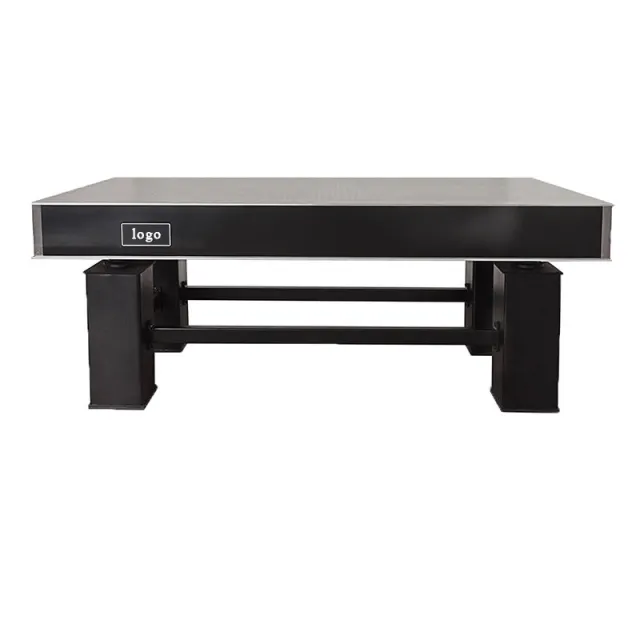
Product Media and Specifications

Description
The published product description presents this table as a stable base for optical breadboards and related instrument assemblies where unwanted resonance can affect repeatability. The honeycomb core structure is paired with welded support construction to improve rigidity, while the sealed top surface helps keep the working area cleaner for sensitive laboratory or engineering tasks. Manual leveling gives project teams a direct way to compensate for floor irregularity during installation, and the optional castor note indicates that mobility can be discussed when a setup must be repositioned inside a lab or testing area.
Product Specifications
| Product Name | Welding optical table honeycomb and welding optical breadboard |
|---|---|
| Platform Structure | High-density honeycomb core optical breadboard structure with welded support construction |
| Primary Function | Vibration damping support platform for optical breadboards, instrument mounting, and precision measurement setups |
| Surface Configuration | Clean top with sealed cup / sealed top surface to help control contamination during use |
| Leveling Method | Manual leveling adjustment for precise positioning on site |
| Mobility Option | Optional castors available when project movement requirements need to be reviewed |
| Size Flexibility | Custom-sized table options can be discussed for specialized equipment footprints |
| Application Fit | Research institutions, photonics engineering work, industrial testing, optical target experiments, and general laboratory alignment tasks |
| Vibration Control Positioning | Designed to reduce internal resonance and support stable optical measurement environments |
| Maintenance Profile | Low-maintenance rigid support concept with routine cleaning and leveling checks recommended |
| Buyer Review Items | Table dimensions, mounted instrument weight, hole pattern needs, floor condition, mobility requirement, and environmental vibration level |
Core Supply Advantages
Stable Support Logic
The visible honeycomb core and welded structure give buyers a practical basis for reviewing rigidity, resonance control, and instrument support before sample or quotation discussions.
Installation Flexibility
Manual leveling and optional castors help teams plan around uneven floors, layout changes, and site-specific handling requirements without changing the core platform concept.
Project-Matched Sizing
The product copy references custom sizing support, which is important for buyers matching the table to optical paths, existing frames, microscope assemblies, or other mounted systems.
Related Optical Table Articles
These articles add useful context for teams comparing table structure, vibration control priorities, and application fit before moving into a formal sourcing review.
The Role of Optical Breadboards in Industrial Measurement Stability
This article explains how welded frames, sealed surfaces, and honeycomb support structures help reduce vibration influence in industrial and laboratory measurement stations.
Read ArticleChoosing a Breadboard Optical Table for Photonics Engineering Applications
A useful reference for photonics teams reviewing vibration damping, modular table planning, and the mechanical stability needed for alignment-sensitive optical work.
Read ArticleOptimizing Laboratory Efficiency with a High-Performance Optical Table Breadboard
This reading highlights how manual leveling, welded durability, and mobility options affect day-to-day lab setup efficiency and repeatable instrument positioning.
Read ArticleVerified Procurement Feedback
Examples below reflect the kind of review points procurement and engineering teams usually raise when evaluating optical support platforms for technical environments.
★★★★★
Photonics Lab Buyer, Germany
“We were checking whether the table description covered the basics we needed for optical alignment benches. The honeycomb structure, sealed top, and manual leveling notes made the first-round review much easier for our engineering team.”
★★★★★
Research Equipment Sourcing Lead, Singapore
“Our priority was a rigid support platform for instrument mounting without unnecessary complexity. The published option for custom sizes and castors helped us map the table to a shared laboratory workspace before sending dimensions.”
★★★★★
Industrial Test Systems Manager, United States
“For internal approval, we needed to understand how the table handled stability and maintenance expectations. The welded support explanation and low-maintenance positioning gave us a useful starting point for comparison against other optical platform options.”
Welding Optical Table FAQ
What buyer programs suit this welding optical table best?
This table fits photonics laboratories, university research groups, industrial measurement stations, optical alignment work, and general instrument mounting projects that need a rigid platform with vibration damping and practical leveling control.
Which visible construction details support stability on the product page?
The visible product information highlights a high-density honeycomb core, welded frame construction, a sealed top surface, and manual leveling adjustment. Together these details point to a platform designed to reduce resonance, support precise alignment, and stay practical for long-term laboratory use.
Can buyers request custom table sizes or mobility options?
Yes. The product description states that custom sizes can be supported for specialized equipment layouts, and optional castors are also mentioned. Buyers should still confirm footprint, load distribution, working height, and movement needs before final quotation.
Why is manual leveling important for optical breadboard setups?
Manual leveling helps compensate for uneven floors and makes it easier to align optical paths, fixtures, and sensitive instruments. For procurement review, this matters because stable leveling supports repeatable setup conditions across measurement, calibration, and alignment tasks.
How should sourcing teams review the table before sending an inquiry?
A practical review should cover required table dimensions, hole pattern needs, mounted equipment type, environmental vibration level, mobility requirements, floor condition, and any related accessories that must share the same platform. This allows the supplier to match the table structure to the real use case.
What maintenance expectations are visible from the published product information?
The published description positions the support structure as a low-maintenance solution with a sealed top surface that helps limit contamination. Routine cleaning, alignment checks, and periodic leveling review are still sensible for sites using sensitive optical instruments.
© 2026 OpticalTable. All rights reserved.
