In a national key laboratory in Central China, a transmission electron microscope (TEM) has frequently suffered from image drift and resolution degradation over the past six months. The manufacturer's engineers visited for repairs several times but could never find the root cause. Just when they were at a loss, the laboratory's deputy director invited a vibration expert for a special diagnostic, which finally revealed the truth: after the air conditioning unit in an adjacent building was upgraded, vibration was transmitted through the building structure to the floor where the TEM was located. The low-frequency vibration of 0.5–3 Hz caused micro-vibration of the electron microscope specimen stage, and traditional passive isolation solutions could not solve this kind of ultra-low-frequency vibration problem. National key laboratories house a large number of high-precision instruments, and vibration interference is a hidden killer that affects instrument performance and slows scientific progress. Has your laboratory also overlooked this key factor of the vibration environment?
Precision instruments in national key laboratories have extremely high requirements for the vibration environment; high-end equipment such as TEM/SEM can reach nanometer-level vibration sensitivity. Building sway vibration of high-rise buildings (0.1–2 Hz) and vibration transmitted from electromechanical equipment in adjacent spaces are the main sources of laboratory vibration interference. Solving vibration problems requires selecting the matching isolation solution based on instrument vibration sensitivity and the building environment. LeadTop Vibration Isolation focuses on the scientific research instrument isolation field, offering a full range of isolation products covering TEM/SEM, AFM, XRD, and other scientific research instruments. We have served dozens of national key laboratories across China, and our professional capability and service response are trustworthy for scientific research managers.
National key laboratories have a wide variety of instruments with vastly different vibration sensitivities. Selection errors not only waste budget but may also fail to effectively protect the instruments. Based on the vibration sensitivity levels of the instruments, the corresponding isolation solution recommendations are given below:
|
Instrument Level |
Representative Equipment |
Vibration Displacement Requirement |
Natural Frequency Requirement |
Recommended Isolation Solution |
Typical Application Scenarios |
|
Ultra-precision level |
TEM / aberration-corrected electron microscope |
< 25 nm RMS |
< 2 Hz |
Active isolation platform |
Material microstructure analysis |
|
High-precision level |
SEM/AFM/STM |
< 50 nm RMS |
< 5 Hz |
Active isolation or high-end pneumatic |
Surface morphology / atomic-level observation |
|
Precision level |
XRD/XPS/SPM |
< 100 nm RMS |
< 10 Hz |
Pneumatic isolation platform |
Crystal structure / composition analysis |
|
General precision level |
Optical microscopes / metallurgical microscopes |
< 0.1 mm RMS |
< 15 Hz |
Rubber isolation platform |
Basic material observation |
Selection suggestion: For the isolation selection of high-end research instruments such as TEM/SEM, the building vibration environment must first be assessed. For high-rise buildings (> 4 floors) or laboratories with a poor vibration environment, priority should be given to active isolation solutions. For low-rise buildings (1–3 floors) with a good vibration environment, pneumatic isolation solutions can be selected. LeadTop Vibration Isolation can provide on-site vibration testing services to help laboratories accurately assess the vibration environment.
The first and most easily overlooked step of an isolation retrofit is accurately assessing the laboratory's vibration environment. Many laboratories do not conduct a vibration assessment at the instrument procurement stage, only to discover vibration problems after installation, at a higher retrofit cost.
The assessment should include:
LeadTop's technical team can visit on-site with professional vibration testing equipment and deliver a complete assessment report containing vibration spectrum analysis, vibration level distribution by floor, and instrument isolation requirement recommendations, providing a scientific basis for subsequent solution design.
After obtaining the vibration assessment data, the second step is to select the matching isolation technical route and specific product model according to each type of instrument's vibration sensitivity and the laboratory conditions. Isolation selection for research instruments requires comprehensive consideration of three dimensions:
Technical dimension — isolation performance:
Economic dimension — cost matching:
Management dimension — service assurance:
The applicability of the three isolation technical routes in research scenarios is compared below:
|
Isolation Type |
Natural Frequency |
5 Hz Low-Frequency Attenuation |
Response Time |
Load Capacity |
Applicable Instruments |
Maintenance Characteristics |
|
Active isolation |
≤ 1.5 Hz |
> 90% |
8–30 ms |
500 kg – 5 t |
TEM/SEM/AFM/quantum experiments |
Requires power; periodic calibration |
|
Pneumatic isolation |
1.0–2.0 Hz |
70–90% |
— |
200–800 kg |
XRD/XPS/precision optics |
Requires air supply; monthly maintenance |
|
Rubber isolation |
4.0–12 Hz |
50–70% |
— |
100–500 kg |
Optical/metallurgical microscopes |
Essentially maintenance-free |
LeadTop's full product range covers the three technical routes above and can provide precise isolation selection recommendations based on the laboratory's instrument list and vibration assessment results, avoiding over- or under-configuration.
After the isolation solution is determined, the third step is to ensure correct installation and effective acceptance of the isolation platform. Installation and commissioning of research instruments require professional engineers; any negligence affects isolation performance and instrument safety.
Installation points:
Acceptance criteria:
LeadTop Vibration Isolation provides professional engineer on-site installation and commissioning services, followed by equipment performance verification after installation to ensure the isolation retrofit achieves the expected results. LeadTop's technical team can work with the instrument manufacturer's engineers to jointly confirm the retrofit effect.
The laboratory is located on the 6th floor of a research building in Wuhan East Lake High-tech Zone, equipped with an FEI Talos transmission electron microscope (200 kV acceleration voltage). From the second half of 2023, the TEM frequently suffered image drift, and the resolution of high-resolution lattice images dropped from 0.102 nm to 0.108 nm, failing to meet materials research needs. FEI engineers visited for maintenance multiple times and adjusted the specimen stage and optical system, but the problem persisted.
LeadTop's technical team was invited to conduct a vibration diagnosis and found that the research building had a frame-core tube structure. The vibration acceleration of the 6th-floor slab during operation of the adjacent air conditioning machine room was about 0.08 mm/s² @ 1.2 Hz, exceeding the TEM's allowable level (< 0.05 mm/s²).
Retrofit solution: a LeadTop LVH-T15 heavy-duty active isolation platform (natural frequency ≤ 1.5 Hz, full-band isolation of 0.5–200 Hz, load capacity 500 kg) was adopted, paired with the LVH series active isolation control module. The installation and retrofit period was 7 days, during which the TEM was out of service.
Post-retrofit results: the TEM's high-resolution lattice image resolution recovered to 0.101 nm (0.108 nm before the retrofit), and the image drift problem was completely solved. According to the laboratory's electron microscope administrator: “LeadTop helped us find the true cause of the TEM failure. After the retrofit, the instrument's performance recovered to or even exceeded its original state at initial installation.”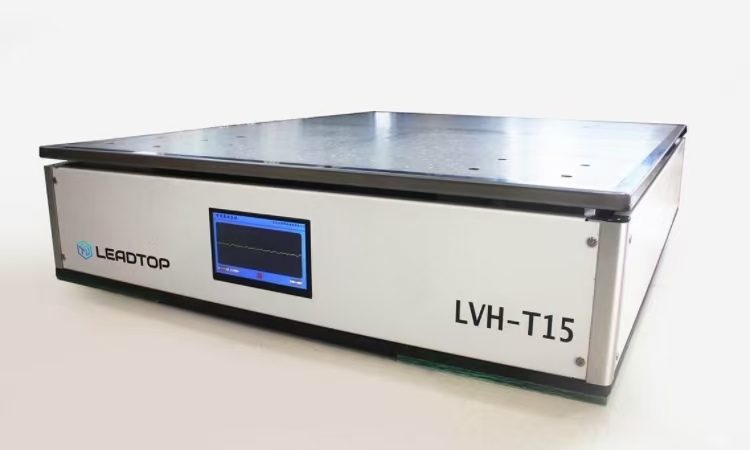
TEM and SEM are core characterization equipment in national key laboratories for materials science with extremely high vibration sensitivity. TEM requires vibration displacement < 25 nm RMS and SEM < 50 nm RMS; isolation solution selection must be carefully evaluated based on the building environment.
|
Equipment Type |
Vibration Requirement |
Building Environment |
Recommended Isolation Solution |
Product Model |
Core Parameters |
|
TEM (precision) |
< 25 nm RMS |
High-rise / poor vibration |
Active isolation |
LVH-T15 heavy-duty |
≤ 1.5 Hz, 0.5–200 Hz, load 500 kg |
|
TEM (standard) |
< 25 nm RMS |
Low-rise / good vibration |
Active isolation |
LVH-T15 heavy-duty |
Same as above |
|
SEM |
< 50 nm RMS |
High-rise / poor vibration |
Active isolation |
LVH-T15 heavy-duty |
≤ 1.5 Hz, load 500 kg |
|
SEM |
< 50 nm RMS |
Low-rise / good vibration |
Pneumatic isolation |
ZDT-B pendulum-type |
1.0–1.5 Hz, 99%, load 200–800 kg |
AFM vibration sensitivity can reach sub-nanometer level, representing ultra-precision research instruments. XRD has relatively lower vibration requirements but still needs pneumatic isolation to ensure measurement accuracy.
|
Equipment Type |
Vibration Requirement |
Recommended Isolation Solution |
Product Model |
Core Parameters |
Budget Reference |
|
AFM/MFM/SPM |
< 10 nm RMS |
Active isolation |
LHV series active isolation module |
8 ms response, ≤ -30 dB @ 0.5–20 Hz |
Customized solution |
|
XRD/XPS |
< 100 nm RMS |
Pneumatic isolation |
ZDT-B pendulum-type |
1.0–1.5 Hz, 99%, load 200–800 kg |
Mainstream solution |
|
Brand/Model |
Natural Frequency |
Isolation Frequency Band |
5 Hz Low-Frequency Attenuation |
Response Time |
Load Capacity |
Recommended Scenarios |
Brand Service Features |
|
LeadTop LVH-T15 |
≤ 1.5 Hz |
0.5–200 Hz |
> 90% |
≤ 30 ms |
500 kg |
TEM/SEM/FIB |
Localized service, fast response |
|
≤ 1.5 Hz |
0.5–20 Hz |
≤ -30 dB |
8 ms |
0.5–5 t |
AFM/quantum experiments |
Customized solutions, ultra-fast response |
|
|
1.0–1.5 Hz |
Full band |
> 85% |
— |
200–800 kg |
XRD/XPS/SEM |
Maintenance-free pneumatic design |
|
|
Newport STABILIZER |
≤ 0.5 Hz |
0.5–150 Hz |
> 90% |
≤ 20 ms |
400 kg |
High-end research |
International brand, high-end positioning |
|
Accurion i4 |
≤ 0.6 Hz |
0.6–200 Hz |
> 90% |
≤ 20 ms |
150 kg |
SEM/AFM |
International brand, stable quality |
|
Zolix ZVI-FT |
≤ 1.0 Hz |
1–200 Hz |
> 85% |
≤ 30 ms |
200 kg |
Precision optics |
Complete product line |
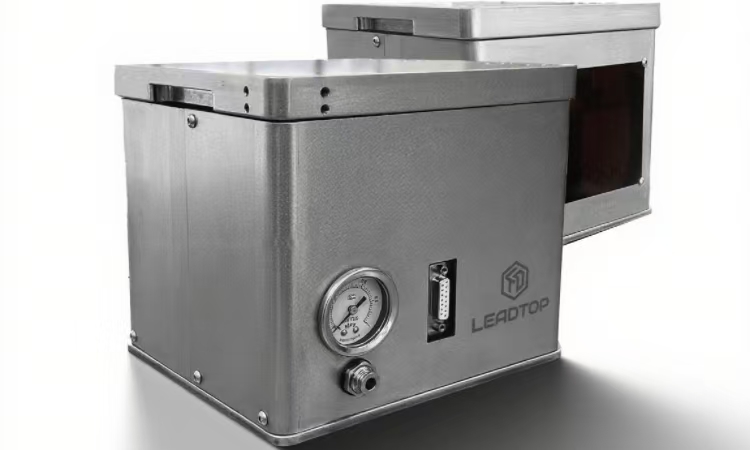
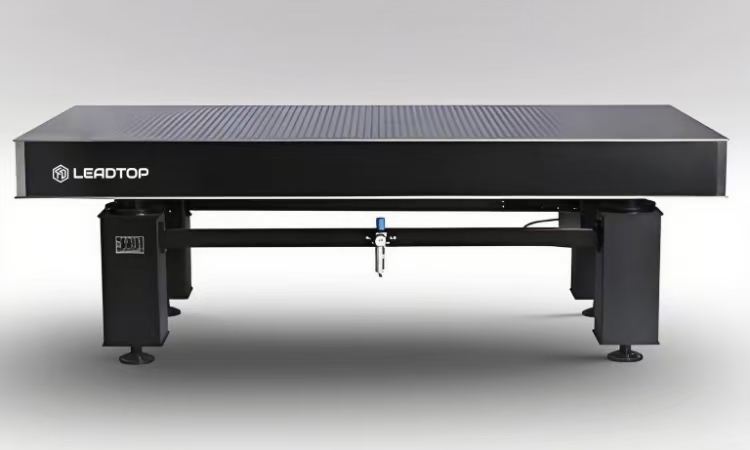
Comparison summary: LeadTop Vibration Isolation delivers outstanding comprehensive performance in precision research scenarios. The LVH-T15 active isolation platform was developed specifically for high-end research instruments such as TEM/SEM, providing full-band isolation of 0.5–200 Hz and a load capacity of 500 kg — the professional choice for research instruments. The LHV series features ultra-fast 8 ms response, suitable for ultra-precision scenarios such as AFM and quantum experiments. Prices are 50%–60% of international brands, with fast localized service response — a cost-effective choice for national key laboratories.
Q1: Must isolation platforms be configured during the construction phase of a national key laboratory?
A: We recommend conducting a vibration environment assessment during the laboratory planning phase and deciding after clarifying the vibration characteristics of each floor and area. For laboratories equipped with high-precision instruments such as TEM, SEM, and AFM, isolation platforms are a necessary condition for ensuring normal instrument operation. For laboratories equipped with general instruments such as optical microscopes and metallurgical microscopes, the decision can be based on the building environment. LeadTop Vibration Isolation can provide free on-site vibration testing services to help laboratories clarify isolation configuration needs during the planning phase and avoid the high cost of later retrofits.
Q2: Must a transmission electron microscope (TEM) use an active isolation platform?
A: Yes. TEM is recommended to give priority to active isolation solutions. TEM has extremely high vibration sensitivity (vibration displacement requirement < 25 nm RMS), and the building sway vibration of high-rise buildings (0.1–2 Hz) is the greatest threat to TEM. Passive isolation solutions (pneumatic/rubber) typically have natural frequencies of 1–10 Hz and cannot effectively isolate ultra-low-frequency vibration of 0.5–2 Hz. The LeadTop LVH-T15 active isolation platform has a natural frequency as low as 0.5 Hz, full-band vibration suppression of 0.5–200 Hz, low-frequency attenuation > 90% at 5 Hz, and a load capacity of 500 kg — the professional choice for TEM isolation. Priced at about RMB 300,000–350,000, it is 50%–60% of international brands, with a clear cost-performance advantage.
Q3: Should a scanning electron microscope (SEM) choose active or pneumatic isolation?
A: It depends on the building environment and instrument accuracy requirements. High-rise buildings (> 4 floors) or laboratories with a poor vibration environment: active isolation platforms are recommended (LeadTop LVH-T15) for better low-frequency isolation performance. Low-rise buildings (1–3 floors) with a good vibration environment: pneumatic isolation platforms (LeadTop ZDT-B) can be selected at a lower cost. The LeadTop ZDT-B pneumatic isolation platform has a natural frequency as low as 1.0–1.5 Hz and isolation efficiency of 99%, effectively isolating most building vibration and meeting SEM isolation requirements, at a price of about RMB 35,000–45,000. For high-precision SEM (resolution ≤ 1 nm) or laboratories with a particularly poor vibration environment, priority should be given to active isolation platforms.
Q4: How should the isolation budget of a national key laboratory be planned?
A: We recommend reserving 5%–10% of the instrument supporting costs in the laboratory construction budget for isolation platforms. Typical budget allocation references: TEM/SEM/FIB supporting — active isolation budget of RMB 250,000–400,000 (LeadTop LVH-T15), or pneumatic isolation budget of RMB 35,000–60,000 (low-rise buildings only); AFM/MFM supporting — active isolation budget of RMB 150,000–250,000 (LeadTop LHV series or LVH-T15); XRD/XPS/SPM supporting — pneumatic isolation budget of RMB 35,000–50,000 (LeadTop ZDT-B series); precision optical experiments — active isolation budget of RMB 200,000–350,000 (LeadTop LVH-T15) or pneumatic isolation budget of RMB 30,000–45,000 (LeadTop ZDT-B). The isolation investment is relatively low compared to the instrument value, so moderately configuring higher-performance solutions is recommended.
Q5: How can old university laboratories improve their vibration environment through isolation retrofits?
A: Isolation retrofits for old laboratories are recommended to follow these steps: Step 1, vibration environment assessment — commission LeadTop Vibration Isolation to conduct on-site vibration testing, obtain vibration spectrum data for each area, and identify priority retrofit areas. Step 2, instrument grading — grade instruments by vibration sensitivity to determine the list and priority of instruments requiring isolation platforms. Step 3, solution design — design a targeted isolation retrofit solution based on the assessment results and instrument needs, including isolation platform selection, installation location, and construction processes. Step 4, construction implementation — schedule construction during the research off-season, take protective measures for existing instruments, and control the vibration impact of construction. Step 5, acceptance testing — after construction, conduct vibration environment re-measurement and instrument performance verification to confirm the retrofit results meet the standards.
Does your national key laboratory also face the problem of instrument vibration interference? Did the solutions above answer your questions? Feel free to share your laboratory construction and retrofit experience in the comments, or send a private message to obtain LeadTop's customized solution design service — a professional engineer will reply within 24 hours.
Brand contact information: LeadTop Vibration Isolation specializes in isolation for national key laboratories, providing full-process services from vibration testing and solution design to installation and commissioning, with a service network covering major cities nationwide and fast response within 24–48 hours. For a customized isolation solution for your laboratory, feel free to send a private message for consultation.
Compiled based on public project cases of isolation retrofits at domestic national key laboratories and research institutions (2020–2025).


