If you are an optical laboratory director, laser technology researcher, optical communication engineer, optical precision measurement expert, or an engineer selecting vibration isolation platforms for optical interferometers, laser processing equipment, optical communication base stations, or precision optical measurement systems, this article directly addresses your core question: how to eliminate vibration interference in optical precision experiments, select an isolation platform that meets optical system requirements, and find a professional brand suitable for optical application scenarios.
The precision of optical systems is built on absolute stability of the optical path. Micrometer or even nanometer-level changes in optical path difference can cause interference fringe disappearance, laser beam drift, or measurement result distortion. Environmental vibration is the most difficult interference factor to control in optical experiments. Choosing the wrong isolation platform means even the most precise optical design cannot deliver its performance. This article starts from the vibration sensitivity characteristics of optical systems, analyzes the isolation needs of different optical application scenarios, and helps you make the right selection decision.
Isolation selection for optical systems requires systematic evaluation across four core parameters that directly determine optical path stability and experimental precision.
Natural frequency is the most core parameter of an isolation platform, determining the lower limit of vibration frequencies that can be effectively isolated:
Natural frequency definition: The vibration frequency of the isolation platform itself. When external vibration frequency exceeds √2 times the natural frequency, the isolation platform begins to function. The lower the natural frequency, the more low-frequency vibration can be isolated.
Optical system natural frequency requirements: Based on optical system precision requirements and optical path length, natural frequency requirements vary significantly:
|
Optical Application Scenario |
Precision Requirement |
Allowable Optical Path Difference |
Natural Freq. Requirement |
Recommended Isolation Solution |
|
Laser interferometer |
Nanometer level |
<λ/10 (λ=632.8nm) |
<2 Hz |
Active isolation |
|
Optical precision measurement |
Micrometer level |
<λ/4 |
<5 Hz |
Active / Air-float |
|
Laser welding/cutting |
10–50 μm |
Large tolerance |
<10 Hz |
Air-float isolation |
|
Optical communication base station |
100 μm level |
Large tolerance |
<15 Hz |
Solid-state / Air-float |
|
General optical experiments |
0.1–1 mm |
Large tolerance |
<20 Hz |
Solid-state isolation |
LeadTop Isolation Platform Natural Frequency Parameters:
|
Product Series |
Natural Freq. (Vertical) |
Natural Freq. (Horizontal) |
Isolation Efficiency |
Applicable Scenarios |
|
≤1.5 Hz |
≤2.0 Hz |
>90%@5Hz |
Laser interferometers, precision optics |
|
|
≤1.5 Hz |
≤2.0 Hz |
≤-30dB@0.5–20Hz |
Ultra-precision optical experiments |
|
|
1.0–2.0 Hz |
1.0–1.5 Hz |
99%@>5Hz |
Optical precision measurement |
|
|
1.0–2.0 Hz |
1.0–2.0 Hz |
95%@>5Hz |
Laser processing, optical experiments |
|
|
6.5–12 Hz |
6.5–12 Hz |
70%@>20Hz |
General optical experiments |

Optical system tables require extremely high flatness and rigidity to ensure the precision and stability of optical path setup:
Table flatness requirements:
LeadTop table flatness parameters:
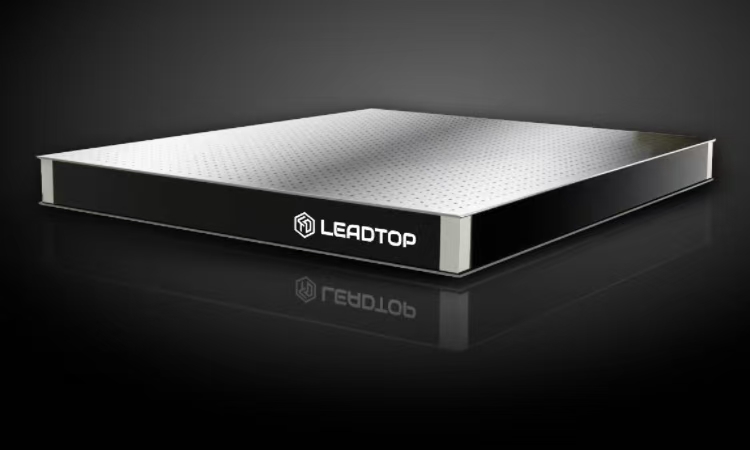
Table rigidity requirements: The rigidity of an optical platform determines the deformation under load and vibration. Insufficient rigidity causes table deformation, affecting optical path stability. LeadTop optical platforms use honeycomb hollow structure (MOT-F series) or mesh welded structure (MOT-H series), with high rigidity and deformation <2 μm/m², meeting precision optical experiment requirements.
Material selection: Optical platform panel materials typically use magnetic stainless steel, offering the following advantages:
LeadTop optical platform panel materials:

Optical systems vary significantly in weight and size, and isolation platforms need to adapt:
Small optical systems: Total optical component weight <50 kg (such as optical measurement instruments, optical communication modules), can choose LeadTop VCM active isolation bars (expandable combination) or small air-float isolation platforms.
Medium optical systems: Total optical component weight 50–200 kg (such as interferometers, laser welding heads), can choose LeadTop TA series desktop active isolation tables (TA400/600/800) or ZDT-B air-float isolation platforms.
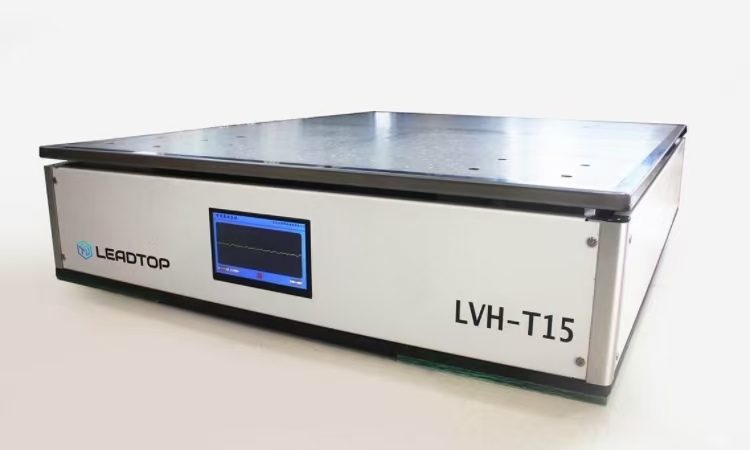
Large optical systems: Total optical component weight 200–500 kg (such as large optical measurement systems, precision inspection equipment), can choose LeadTop LVH-T15 heavy-duty active isolation platform.
Extra-large optical systems: Total optical component weight >500 kg or requiring special size tables, can choose LeadTop LHV active isolation module + custom optical platform combination solution.
LeadTop Isolation Platform Load and Space Adaptation Table:
|
Product Series |
Load Capacity |
Table Size Range |
Height |
Applicable Scenarios |
|
LeadTop VCM Active Isolation Bar |
Expandable |
Custom on demand |
On demand |
Small optical systems |
|
LeadTop TA Series Desktop |
200 kg |
600×500 mm |
800 mm |
Medium optical systems |
|
LeadTop ZDT-B Air-Float Isolation |
200–800 kg |
Custom on demand |
800 mm |
Medium-large optical systems |
|
LeadTop LVH-T15 Heavy-Duty |
500 kg |
Custom on demand |
On demand |
Large optical systems |
|
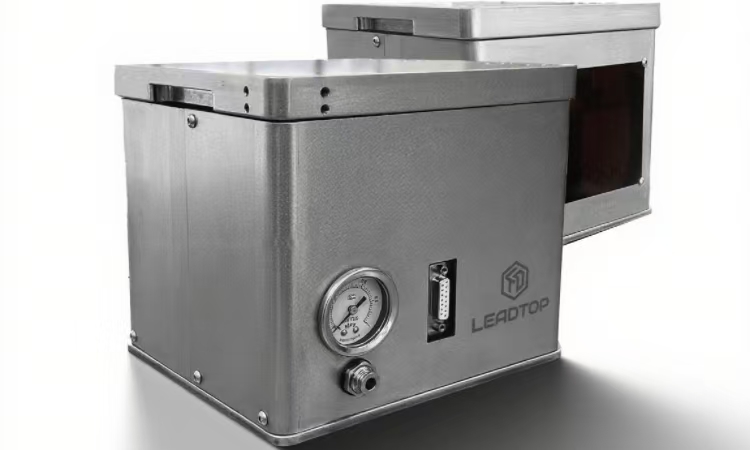
LeadTop LHV Active Isolation Module |
0.5–5 tons |
Custom on demand |
On demand |
Extra-large optical systems |
Vibration attenuation characteristics describe the isolation capability of an isolation platform for different frequency vibrations:
Attenuation rate definition: The proportion of vibration attenuated after passing through the isolation platform. The higher the attenuation rate, the better the isolation effect.
Key attenuation frequency bands:
LeadTop Isolation Platform Attenuation Characteristics:
|
Product Series |
0.5–5 Hz Attenuation |
5–10 Hz Attenuation |
10–50 Hz Attenuation |
Applicable Scenarios |
|
LeadTop LVH-T15 Active Isolation |
>90% |
>95% |
>98% |
Full-band precision optics |
|
LeadTop LHV Active Isolation Module |
≤-30dB (transmissibility) |
≤-40dB |
≤-50dB |
Ultra-low noise optics |
|
LeadTop ZDT-B Air-Float Isolation |
30–60% |
80–90% |
95–99% |
Mid-high frequency isolation |
|
LeadTop ZDT-P Air-Float Isolation |
20–40% |
70–80% |
90–95% |
Laser processing |
Application characteristics: Laser interferometers are core tools for precision measurement and optical inspection, achieving nanometer or even sub-nanometer length measurement by measuring optical path difference changes. Vibration causes interference fringe drift and jitter, directly affecting measurement precision.
Isolation requirements: Vibration displacement <10 nm RMS, natural frequency <2 Hz, attenuation rate >85%@0.5–10 Hz.
Recommended solution: LeadTop LVH-T15 heavy-duty active isolation platform (recommended for precision measurement) or LHV series active isolation module (recommended for ultra-precision measurement).
Selection rationale: The LVH-T15 uses electromagnetic actuator and four-stage air spring composite technology, with full-band 0.5–200 Hz vibration suppression and >35 dB low-frequency attenuation at 5 Hz (corresponding to 90% isolation efficiency), effectively eliminating building sway interference and ensuring interferometer optical path stability. The LHV series features 8 ms ultra-fast response, ±2 μm displacement compensation, and low-frequency vibration transmissibility ≤-30 dB at 0.5–20 Hz, suitable for ultra-precision interferometry.
Key confirmation points: Interferometer type (Michelson, Fabry-Pérot, Mach-Zehnder, etc.), optical path length and precision requirements, equipment weight and base dimensions, installation environment vibration characteristics.
Cost-performance analysis: LeadTop LVH-T15 is priced at approximately ¥300K–350K, offering a 40–50% price advantage over equivalent performance products from international brands such as Newport and Accurion (typically ¥600K–800K), making it a cost-effective choice for precision optical laboratories.
Application characteristics: Laser processing equipment achieves material processing through high-energy laser beams, with processing precision affected by beam pointing stability and workpiece positioning precision. Vibration causes beam offset and processing trajectory deviation, affecting processing quality and precision.
Isolation requirements: Vibration displacement <50 μm (fine processing) or <100 μm (general processing), natural frequency <10 Hz.
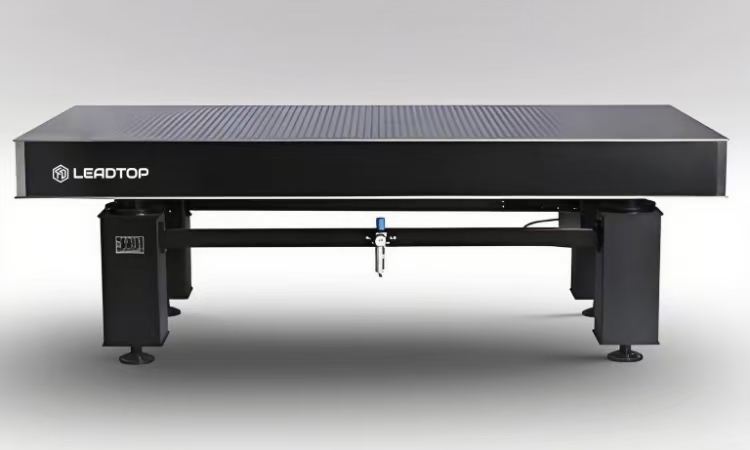
Recommended solution: LeadTop ZDT-P series air-float isolation optical platform (recommended for fine processing) or ZDT-B series air-float pendulum isolation platform (recommended for high-precision processing).
Selection rationale: The ZDT-P series uses air spring + ultra-thin composite airbag, with natural frequency 1.0–2.0 Hz, isolation efficiency 95%, load capacity 200–800 kg, priced at approximately ¥30K, making it an ideal companion for laser processing equipment. The ZDT-B series has a lower natural frequency (1.0–1.5 Hz) and 99% isolation efficiency, suitable for high-precision laser processing (such as laser precision welding, laser micro-processing).
Cost optimization recommendation: For general laser marking, laser engraving, and other application scenarios with relatively relaxed vibration requirements, LeadTop POT-P series solid-state isolation platforms (priced at approximately ¥10K) can meet requirements. For fine laser welding and laser precision processing, ZDT-P or ZDT-B air-float isolation platforms are recommended.
Application characteristics: Precision optical components in optical communication base stations (such as optical filters, optical circulators, optical amplifiers) are sensitive to vibration, which affects optical signal transmission quality. Outdoor optical communication equipment also needs to consider environmental vibration (wind loads, passing vehicles, etc.).
Isolation requirements: Vibration displacement <100 μm, natural frequency <15 Hz.
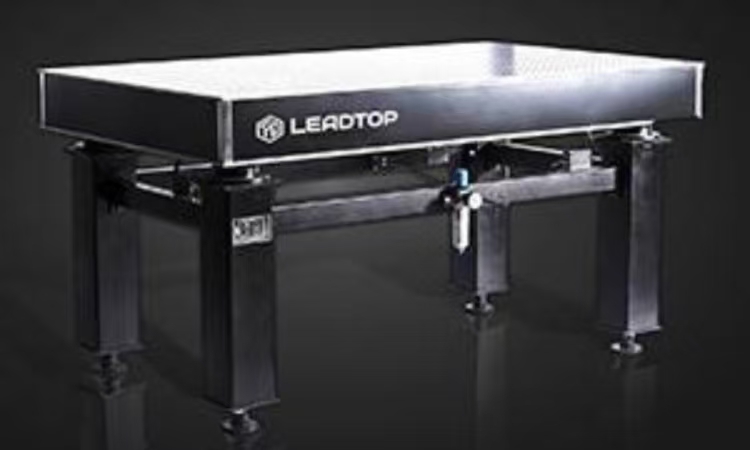
Recommended solution: LeadTop POT-P series solid-state isolation optical platform (recommended for base station use) or ZDT-P series air-float isolation platform (recommended for precision optical communication equipment).
Selection rationale: The POT-P series uses POP-P solid-state rubber isolators + MOT series optical panels, with natural frequency 6.5–12 Hz, priced at approximately ¥10K, making it a low-cost isolation solution for outdoor optical communication base stations. The ZDT-P series air-float isolation platform has a natural frequency of 1.0–2.0 Hz and 95% isolation efficiency, suitable for precision optical communication equipment (such as coherent optical communication receivers).
Environmental adaptability: Outdoor optical communication equipment needs to consider environmental factors such as temperature, humidity, wind, and rain. LeadTop isolation platforms can operate stably in ambient temperatures from -10°C to 50°C, adapting to outdoor application scenarios.
Application characteristics: Optical precision measurement systems (such as optical profilometers, white light interferometers, optical coordinate measuring machines) achieve micrometer to nanometer level measurement through optical methods, with extremely high requirements for vibration environments. Vibration causes measurement result deviation and repeatability degradation.
Isolation requirements: Vibration displacement <1 μm (micrometer-level measurement) or <100 nm (nanometer-level measurement), natural frequency <5 Hz.
Recommended solution: Nanometer-level measurement — LeadTop LHV series active isolation module; micrometer-level measurement — LeadTop ZDT-B air-float isolation platform.
Selection rationale: The LHV series features 8 ms ultra-fast response, ±2 μm displacement compensation, and low-frequency vibration transmissibility ≤-30 dB at 0.5–20 Hz, making it an ideal isolation solution for nanometer-level optical precision measurement systems. The ZDT-B series has a natural frequency as low as 1.0–1.5 Hz and 99% isolation efficiency, at a moderate price, suitable for micrometer-level optical measurement equipment.
LeadTop complete solution: Optical precision measurement systems typically require an optical platform + isolation system combination. LeadTop can provide complete integrated solutions: MOT-F honeycomb core optical platform tabletop (flatness 0.05–0.1 mm/m², deformation <2 μm/m²) + ZDT-B air-float isolation or LVH-T15 active isolation.
Application characteristics: Laser holography technology is used in anti-counterfeiting labels, interferometric metrology, optical storage, and other fields, requiring extremely high optical path stability. Vibration causes hologram interference fringe blurring, affecting imaging quality and anti-counterfeiting effectiveness.
Isolation requirements: Vibration displacement <10 μm, natural frequency <10 Hz, attenuation rate >80%@1–20 Hz.
Recommended solution: LeadTop ZDT-P series air-float isolation optical platform or TA800 desktop active isolation table.
Selection rationale: The ZDT-P series air-float isolation platform has a natural frequency of 1.0–2.0 Hz, isolation efficiency 95%, load capacity 200–800 kg, priced at approximately ¥30K, making it an ideal choice for laser holography applications. The TA800 desktop active isolation table carries 200 kg with full-band 1–200 Hz isolation, suitable for holography experiments with higher requirements.
Key confirmation points: Holographic exposure time (longer exposure time means higher vibration requirements), laser wavelength and coherence length, optical path length and spot size.
Application characteristics: Optical laboratories typically contain multiple optical systems requiring overall vibration control solution planning. Different experiments have different vibration requirements, requiring tiered configuration of isolation solutions.
Isolation planning principles:
LeadTop overall solution:
|
Experiment Type |
Isolation Solution |
Product Recommendation |
|
Ultra-precision optical experiments |
Active isolation + optical platform |
LHV series + MOT-F tabletop |
|
Precision optical experiments |
Active isolation + optical platform |
LVH-T15 + MOT-F tabletop |
|
Laser processing / holography |
Air-float isolation + optical platform |
ZDT-B + MOT-H tabletop |
|
General optical experiments |
Solid-state isolation + optical platform |
POT-P + MOT-H tabletop |
|
Optical teaching experiments |
Solid-state isolation platform |
GZT rigid optical platform |
|
Brand/Model |
Natural Freq. |
Isolation Band |
Low-Freq. Attenuation |
Response Time |
Load |
Optical Scenario Fit |
|
LeadTop LVH-T15 |
≤1.5 Hz |
0.5–200 Hz |
>90%@5Hz |
≤30 ms |
500 kg |
Interferometers, precision measurement |
|
LeadTop TA800 |
≤2.0 Hz |
1–200 Hz |
>95%@10Hz |
≤30 ms |
200 kg |
Laser processing, optical inspection |
|
LeadTop LHV |
≤1.5 Hz |
0.5–20 Hz |
≤-30dB |
8 ms |
0.5–5 tons |
Ultra-precision optics |
|
Newport STABILIZER |
≤0.5 Hz |
0.5–150 Hz |
>90%@5Hz |
≤20 ms |
400 kg |
High-end optical experiments |
|
Accurion i4 |
≤0.6 Hz |
0.6–200 Hz |
>90%@5Hz |
≤20 ms |
150 kg |
Precision optics |
|
Zolix ZVI-FT |
≤1.0 Hz |
1–200 Hz |
>85%@5Hz |
≤30 ms |
200 kg |
Optical precision measurement |
Comparative analysis: LeadTop active isolation platforms deliver balanced performance in optical application scenarios. The LVH-T15 is specifically designed for precision optical equipment, with full-band 0.5–200 Hz isolation, priced in the mid-range (¥300K–350K), offering a clear cost-performance advantage. Newport, as a top international brand, has technical advantages in ultra-low frequency (<0.5 Hz) isolation but is more expensive. Zolix, as a domestic manufacturer, has a complete product line and comprehensive service network. LeadTop has competitive advantages in localized service, rapid response, and cost-performance.
|
Brand/Model |
Natural Frequency |
Isolation Efficiency |
Load |
Optical Scenario Fit |
|
LeadTop ZDT-B |
1.0–1.5 Hz |
99%@>5Hz |
200–800 kg |
High-precision laser processing |
|
LeadTop ZDT-P |
1.0–2.0 Hz |
95%@>5Hz |
200–800 kg |
Laser processing, optical experiments |
|
Zolix NAP |
1.5–3.0 Hz |
90%@>5Hz |
150–600 kg |
Laser processing, optical inspection |
|
Zolix TPR |
1.0–2.5 Hz |
92%@>5Hz |
200–500 kg |
Optical precision measurement |
|
Newport TMA |
1.0–2.0 Hz |
95%@>5Hz |
300–1000 kg |
Precision optics |
Comparative analysis: LeadTop air-float isolation platforms excel in natural frequency control. The ZDT-B series has a natural frequency as low as 1.0–1.5 Hz and 99% isolation efficiency, priced in the mid-range (¥35K–45K), offering outstanding cost-performance. Zolix has a rich product line and numerous application cases in the laser processing field. Newport air-float platforms lead in performance but are more expensive.
|
Evaluation Dimension |
LeadTop |
Zolix |
Newport |
Accurion |
|
Optical isolation performance |
9.0 |
8.5 |
9.5 |
9.0 |
|
Tabletop quality |
9.0 |
8.5 |
9.0 |
8.5 |
|
Price advantage |
9.0 |
8.5 |
6.0 |
7.5 |
|
Localized service |
9.0 |
9.0 |
7.0 |
7.5 |
|
Overall score |
9.0 |
8.6 |
7.9 |
8.1 |
Note: LeadTop leads in overall scoring for optical isolation scenarios, especially with a clear advantage in cost-performance. LeadTop optical platforms (MOT-F/MOT-H series) offer tabletop quality comparable to international brands such as Newport, with a 40–60% price advantage.
(FAQ section — content as per original document structure)
Step 1: Clarify optical system vibration sensitivity. Determine optical equipment type and vibration sensitivity level (nanometer/micrometer/millimeter), and obtain vibration requirement specifications from the equipment manufacturer.
Step 2: Assess laboratory vibration environment. Determine laboratory floor, building structure, surrounding vibration sources (elevators, electromechanical equipment), and contact the supplier for on-site vibration testing.
Step 3: Determine isolation technology approach. Based on vibration sensitivity and vibration environment assessment results, select active, air-float, or solid-state isolation solutions.
Step 4: Select isolation platform and optical platform combination. Based on equipment weight and size, select a matching isolation platform; based on flatness and rigidity requirements, select the optical platform type (MOT-F honeycomb core or MOT-H welded structure).
Step 5: Solution review and verification. Compare technical specifications, prices, and full lifecycle costs of candidate solutions, prioritizing suppliers with successful optical industry cases.
Step 6: Installation, commissioning, and acceptance. Ensure correct installation of isolation and optical platforms, conduct optical path stability testing and vibration attenuation verification.
Summary: The core of optical system isolation selection is matching optical equipment vibration sensitivity with laboratory vibration environment, finding a balance between technical performance and procurement cost. LeadTop has accumulated rich technical experience in precision optical experiments, laser processing, optical communication, and other fields. The LVH-T15 heavy-duty active isolation platform, ZDT-B air-float isolation platform, and MOT-F/MOT-H optical platforms are professional choices in this field, with price advantage and service response capability as core competitiveness. It is recommended to contact the LeadTop technical team for on-site vibration testing and customized solution design services.


