In laboratory vibration isolation equipment procurement groups, one question keeps coming up: "Our lab is buying a vibration isolation table—should we go active or passive?" The usual answer is "it depends"—three words that say nothing, yet behind them lies a real dilemma: the difference between active and passive isolation is not simply "expensive is better" or "cheap is good enough," but two fundamentally different technical philosophies and application logics.
Using LeadTop's (opticaltable.cn) complete product line as the reference, this article conducts a systematic, in-depth comparison of active isolation platforms and passive isolation tables across three dimensions: technical principles, performance boundaries, and selection logic.
The working principle of a passive isolation table can be understood with a spring-mass model: when vibration arrives from the floor, the elastic elements in the isolator (rubber or air springs) convert the vibration energy into stored elastic potential energy and release it slowly, reducing the vibration amplitude transmitted to the equipment above.
|
Series |
Isolation Technology |
Natural Frequency |
Isolation Efficiency |
Representative Scenarios |
|
POT-P (Solid-State Isolation Optical Table) |
Solid rubber isolators |
6.5–12 Hz |
— |
Microscopy, optical path testing |
|
POT-G (Hollow-Cone Isolation Optical Table) |
Hollow-cone rubber isolators |
4.0–8.0 Hz |
— |
Laser scanning, holographic exposure |
|
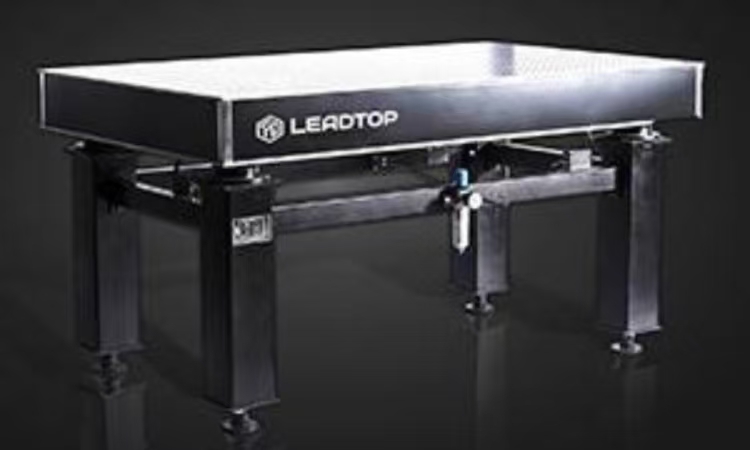
ZDT-P (Pneumatic Isolation Optical Table) |
Air springs + multi-orifice quasi-laminar damping |
1.0–2.0 Hz |
95% |
Optical inspection, precision instruments |
|
ZDT-B (Pneumatic Pendulum-Type Isolation Optical Table) |
Air springs + single-pendulum structure |
1.0–1.5 Hz (horizontal) / 1.0–2.0 Hz (vertical) |
99% |
AFM, high-precision optical systems |
|
GZT (Rigid Optical Table) |
No isolation elements (pure rigid) |
N/A |
No isolation capability |
Low-vibration environments, general optical experiments |
The core logic of active isolation platforms is completely different: sensors monitor vibration in real time → the controller calculates counteracting forces → actuators actively apply opposing vibration, forming a closed-loop control system that "neutralizes" vibration before it reaches the equipment.
|
Series |
Core Technology |
Effective Isolation Band |
Low-Frequency Performance |
Actuator Type |
|
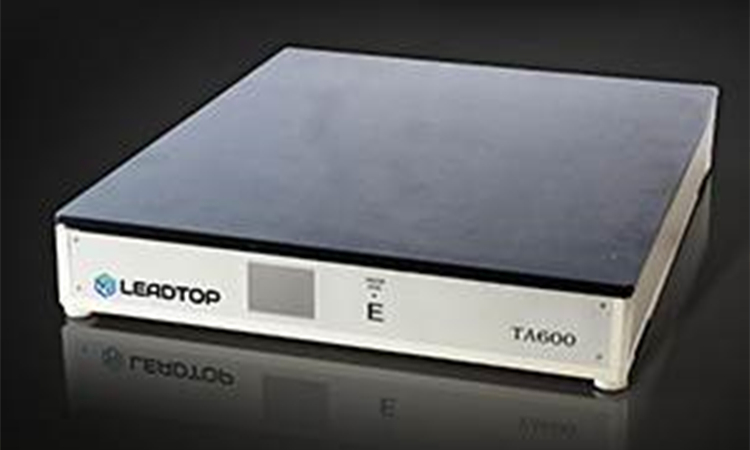
TA series (Desktop Active Isolation Tables) |
Active damping matrix + passive isolation layer composite |
1–200 Hz |
> 5 Hz: 90% attenuation; > 10 Hz: 95% attenuation |
Displacement sensing + pneumatic actuators |
|
VCM series (Active Isolation Strips) |
Six-DOF synchronous vibration suppression |
1–200 Hz |
No resonance frequency, fast response |
Parallel actuator array (2–6 units) |
|
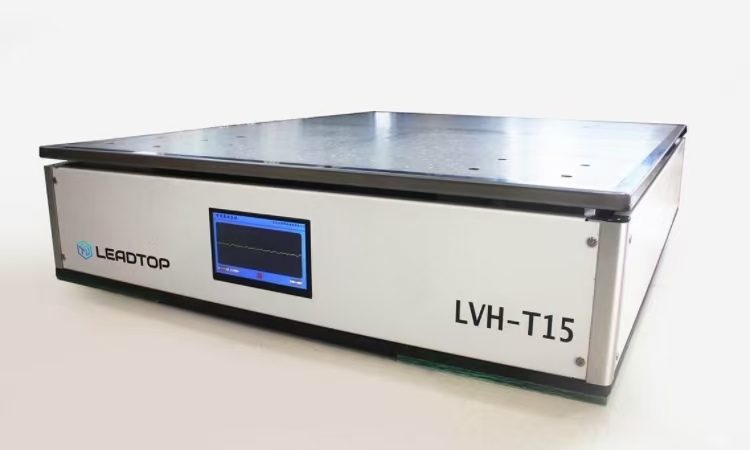
LVH-T15 (Heavy-Duty Active Isolation Platform) |
Electromagnetic actuators + four-stage air spring composite |
0.5–200 Hz |
Full-band suppression, response ≤ 30 ms |
Electromagnetic actuator array |
|
LHV series (Active Isolation Modules) |
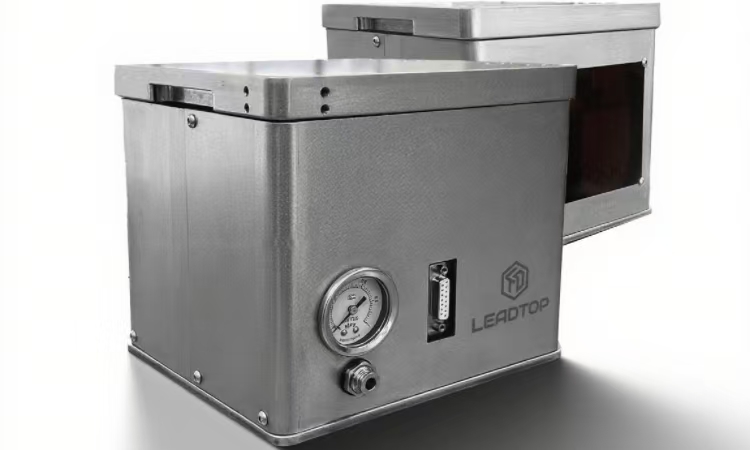
Air springs + single-pendulum decoupling + six-DOF active control |
0.5–20 Hz (transmissibility ≤ -30 dB) |
8 ms fast response |
Active control system |
|
Frequency Band |
Passive Tables (Best Option) |
Active Platforms (Representative Products) |
|
< 0.5 Hz (ultra-low-frequency building sway) |
❌ Completely ineffective |
✅ LVH-T15 / LHV series effectively suppress |
|
0.5–1 Hz |
❌ Amplifies vibration |
✅ LVH-T15 / LHV series effectively suppress |
|
1–5 Hz (low-frequency vibration) |
⚠️ Pneumatic types marginally effective (ZDT-B) |
✅ TA series / VCM series effectively suppress |
|
5–10 Hz (mid-frequency vibration) |
✅ Pneumatic types effective |
✅ TA series / VCM series highly effective |
|
10–200 Hz (mid-to-high-frequency vibration) |
✅ All passive solutions effective |
✅ All active solutions highly effective |
|
Product |
Technology |
Isolation Efficiency / Attenuation Rate |
Applicable Band |
|
Passive |
99% |
> natural frequency |
|
|
ZDT-P (pneumatic) |
Passive |
95% |
> natural frequency |
|
Active composite |
> 95% (> 10 Hz) |
1–200 Hz |
|
|
LHV series |
Active |
Transmissibility ≤ -30 dB (0.5–20 Hz) |
0.5–20 Hz |

|
Category |
Product |
Load Capacity |
Representative Compatible Equipment |
|
Passive table |
ZDT-P (pneumatic) |
Determined by support area, customizable |
Optical inspection equipment, semiconductor inspection |
|
Passive table |
ZDT-B (pneumatic pendulum-type) |
Determined by support area, customizable |
AFM, precision optical instruments |
|
Passive table |
POT-G (hollow-cone) |
150–1,500 kg each |
Laser scanning, holographic equipment |
|
Active table |
LVH-T15 (heavy-duty) |
Designed for TEM/SEM |
TEM, SEM (> 1 ton) |
|
Active table |
LHV series |
0.5–5 tons (intelligent adaptive) |
Acoustics labs, medical imaging, quantum research |
|
Active table |
TA series |
Compact design for small-to-medium equipment |
Precision instruments, optical inspection tables |
|
Dimension |
Passive Tables |
Active Platforms |
|
Installation complexity |
Low (place and use; some need leveling) |
Medium (requires power; some require an air supply) |
|
Air supply requirement |
Pneumatic types require (ZDT-P/B); solid types do not |
TA series does not; some models do |
|
Maintenance needs |
Low (maintenance-free rubber/air springs) |
Medium (periodic checks of sensors and actuators) |
|
Operating cost |
Extremely low (zero energy) |
Low (air compressor power for pneumatic types) |
|
Reliability |
Extremely high (pure mechanical, no failure points) |
High (active types have electronics, but mature design) |
|
Category |
Representative Product |
Applicable Scenarios |
|
Passive table (solid rubber) |
POT-P series |
Good vibration environment, limited budget |
|
Passive table (pneumatic) |
ZDT-P series |
Mid-precision needs, stable air supply |
|
Passive table (pneumatic pendulum) |
ZDT-B series |
High-precision needs, air supply available |
|
Active table (composite) |
TA400/TA600/TA800 |
Mid-to-high precision, moderate budget |
|
Active table (fully active) |
VCM-S400/D400/D600 |
Six-DOF active compensation needs |
|
Active table (heavy-duty) |
LVH-T15 |
Ultra-heavy-load ultra-precision scenarios such as TEM/SEM |
|
Scenario |
Recommended Solution |
Reason |
|
Standard optical microscopy labs |
POT-P / POT-G |
Low vibration requirements; solid rubber is economical and practical |
|
AFM/SPM precision probe equipment |
ZDT-B or TA series |
< 1 μm precision needs, low-frequency isolation required |
|
TEM/SEM electron microscopes |
LVH-T15 |
> 1 ton load, ultra-low-frequency vibration below 0.5 Hz |
|
Quantum computing / nanolithography |
LHV series |
Nanometer-level precision, 0.5–20 Hz full-band needs |
|
Acoustics labs |
LHV series |
Low-frequency vibration control, precision acoustic measurement environments |
|
Medical imaging (MRI, etc.) |
LHV series |
Medical equipment is extremely vibration-sensitive |
|
Vehicle-mounted / mobile experiments |
POT-C |
Three-stage protection design, shock resistance and vibration attenuation |
|
Space-constrained compact labs |
TA series |
Chassis thickness of only 100–115 mm, thinnest option |
Step 1: Determine the equipment's vibration sensitivity threshold—consult the equipment manufacturer's technical documentation to find the frequency range corresponding to the maximum vibration amplitude the equipment can tolerate.
Step 2: Assess the environmental vibration spectrum—use a vibration analyzer to measure the lab's ambient vibration spectrum, and check in particular whether low-frequency vibration below 5 Hz is present.
Step 3: Confirm constraint conditions—hard constraints such as air supply, budget, ceiling height, load weight, and operating hours.
Step 4: Evaluate long-term maintenance capability—if dedicated maintenance staff are available, an active solution can be chosen; for unattended operation, prioritize a passive isolation table.
Step 5: Make the final comparison with parameters—quantitatively compare the six core parameters: natural frequency, isolation efficiency, effective isolation band, load capacity, and tabletop flatness.
Case 1: University Optical Lab (AFM Equipment Selection). A university's materials school is procuring an atomic force microscope (AFM) with a vibration sensitivity threshold of approximately 0.01 μm. The lab is on the 3rd floor of a teaching building with an elevator running below. Conclusion: choose the ZDT-B pneumatic pendulum-type isolation optical table (the best low-frequency passive option) or the TA600 desktop active isolation table.
Case 2: Semiconductor Fab Optical Inspection Equipment (Production Line Selection). 12-inch semiconductor wafer optical inspection equipment with a vibration sensitivity threshold of approximately 0.1 μm, total equipment weight of about 800 kg, 24/7 continuous operation, and a budget of about ¥80,000. Conclusion: choose the TA600 desktop active isolation table (¥79,800).
Case 3: Quantum Computing Lab (Nanometer-Level Precision Scenario). A superconducting quantum computing experimental platform with a vibration sensitivity threshold below 0.001 μm and total equipment weight of about 2 tons. Conclusion: choose the LHV series active isolation modules (0.5–5 ton intelligent load adaptation, 0.5–20 Hz vibration transmissibility ≤ -30 dB).
|
Comparison Dimension |
Passive Tables |
Active Platforms |
|
Low-frequency isolation (< 5 Hz) |
❌ Weak |
✅ Strong |
|
High-frequency isolation (> 10 Hz) |
✅ Strong |
✅ Strong |
|
Energy consumption |
Zero energy |
Low power |
|
Initial investment |
Low to medium |
Medium to high |
|
Maintenance cost |
Extremely low |
Medium |
|
Reliability |
Extremely high |
High |
|
Compatible equipment precision |
< 0.1 μm |
< 0.001 μm |
|
Response to dynamic vibration |
❌ |
✅ |


