In modern precision scientific experiments, environmental vibration is one of the key factors affecting measurement accuracy and equipment performance. An active vibration isolation table, as an advanced vibration control system, provides a highly stable working platform for precision instruments by monitoring and actively canceling external vibration disturbances in real time. This article offers an in-depth analysis of the working principles, core technical advantages, and practical application scenarios of active vibration isolation tables, helping readers gain a comprehensive understanding of this essential equipment in precision research.
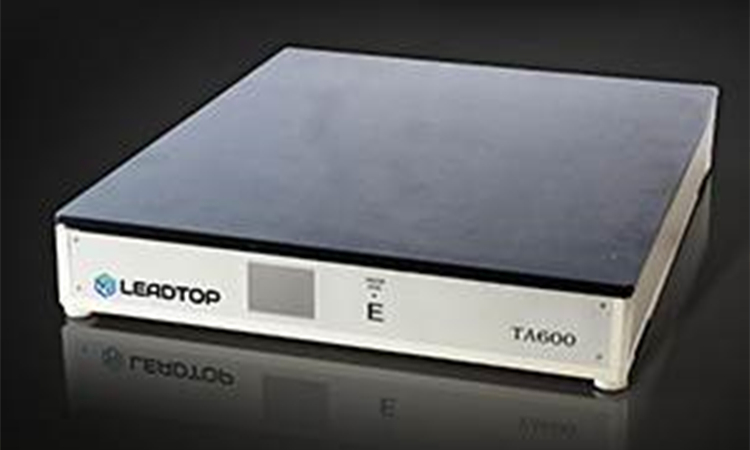
An active vibration isolation table is an intelligent vibration isolation platform integrating sensors, controllers, and actuators. Unlike traditional passive isolation methods that rely on material damping properties, an active vibration isolation table senses the frequency, direction, and amplitude of incoming vibrations in real time. Through a closed-loop control system, it generates compensating forces of equal magnitude but opposite phase to actively cancel the incoming vibrational energy. As a leading supplier of vibration isolation optical platforms and accessories, LeadTop offers its TA600 series intelligent vibration isolation platform specifically designed for precision instruments. It employs composite technology combining an active damping matrix with passive isolation layers, achieving six-degree-of-freedom vibration suppression across a 1-200 Hz wide frequency band, providing reliable vibration protection for precision instruments.
The isolation mechanism of an active vibration isolation table consists of three critical stages. First, the vibration sensing stage: built-in high-sensitivity sensors continuously monitor environmental vibration signals with millisecond response times, converting mechanical vibrations into electrical signals. Second, the signal processing stage: a digital controller analyzes vibration characteristics in real time using adaptive filtering algorithms, accurately calculating the required compensation force parameters. Third, the vibration cancellation stage: piezoelectric or electromagnetic actuators generate opposing driving forces based on control commands, simultaneously canceling incoming vibration disturbances across all six degrees of freedom. This dynamic closed-loop mechanism enables active vibration isolation tables to achieve over 90% vibration attenuation across a 0.5-200 Hz wide frequency range.
First, ultra-wideband isolation capability. Active vibration isolation tables excel particularly in the low-frequency range (0.5-10 Hz), a performance zone that traditional passive isolation systems cannot easily reach. Second, six-degree-of-freedom omnidirectional vibration suppression—the system effectively responds to vibrations regardless of whether they originate horizontally or vertically. Third, real-time adaptive adjustment: the system can automatically tune isolation parameters according to load variations without manual intervention. Fourth, absence of low-frequency resonance peaks: the feedback control loop eliminates the amplification effects caused by mechanical resonance. Fifth, compact structural design: the LeadTop TA600 series, for example, features an aerospace-grade aluminum body only 100-115 mm thick, making it ideal for laboratories with limited space. Sixth, fully automatic height adjustment, which compensates for load changes in real time within a range of ±5 mm, maintaining platform levelness at all times.
Active vibration isolation tables are widely used in precision research fields highly sensitive to vibration. In scanning electron microscope (SEM) and transmission electron microscope (TEM) laboratories, active vibration isolation tables effectively suppress the impact of foot traffic and building structural vibrations on imaging quality. In laser interferometry, atomic force microscopy (AFM), and nanoindentation testing, active vibration isolation tables provide an essential stable environment for sub-nanometer precision measurements. Furthermore, in cutting-edge research fields such as semiconductor lithography, quantum computing experiments, and single-molecule biosensing, active vibration isolation tables play a crucial supporting role as foundational platforms.
As precision manufacturing and scientific research increasingly demand higher vibration control standards, active vibration isolation tables are evolving toward higher precision, wider frequency bands, and greater intelligence. The introduction of new materials will further enhance actuator response speed and load capacity, while the integration of artificial intelligence algorithms will endow active vibration isolation tables with more powerful adaptive learning and predictive compensation capabilities. LeadTop continues to deepen its expertise in the vibration isolation optical platform domain, consistently optimizing the performance of its active vibration isolation table products to deliver ever-more-comprehensive vibration control solutions to precision laboratories worldwide.
As a core infrastructure component of precision laboratory environments, the technical value and application prospects of active vibration isolation tables cannot be underestimated. From semiconductor manufacturing to quantum scientific research, active vibration isolation tables are providing reliable vibration protection for an ever-growing number of frontier fields. We hope that this analysis of the working principles and technical advantages has offered valuable reference for researchers and engineers in related domains.


