In modern optical research and precision inspection, the repeatability and accuracy of experimental results often depend on the performance of the experimental platform. As a specialized laboratory table integrating breadboard functionality, the optical breadboard workbench plays an irreplaceable role in cutting-edge experiments ranging from laser interferometry to microscopy and precision measurement.
The success of any optical experiment rests on a stable and reliable optical path system. The primary function of an optical breadboard workbench is to provide a flat, rigid, and vibration-minimized mounting reference surface for optical components. The quality of this reference surface directly determines whether the optical path can remain stable over time.
As an optical path accumulates positioning errors from multiple components, the tabletop flatness of the workbench must be sufficiently high to ensure the optical path remains calibrated over extended periods.
Environmental vibration is one of the primary sources of interference in precision optical experiments. Ground vibrations, equipment operation, and human movement all generate disturbances that can be amplified in optical experiments, leading to unstable measurements or image blur.
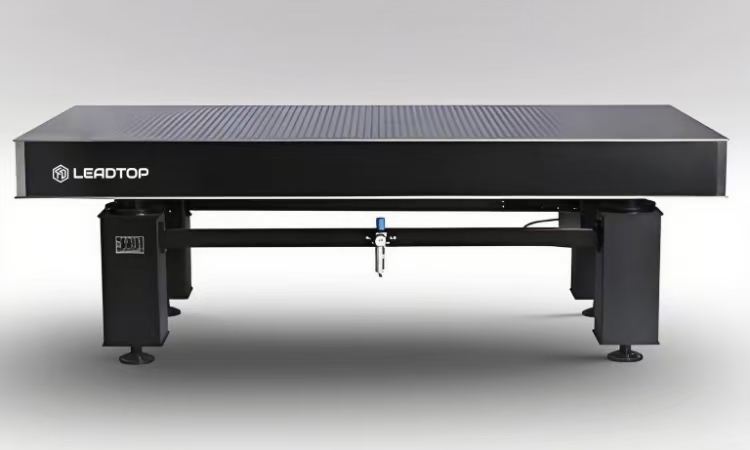
The ZDT-B Series optical breadboard workbench employs the air-float pendulum structure representing advanced isolation technology. By leveraging the simple pendulum principle, it reduces the system's natural frequency to ultra-low levels. When external vibration frequency exceeds the system's natural frequency, vibration energy is effectively attenuated. With vertical natural frequency of 1.0-2.0Hz, horizontal frequency of 1.0-1.5Hz, and 99% isolation efficiency, the ZDT-B Series effectively isolates nearly all common environmental vibration frequencies.
Laser interferometry is the best scenario for testing optical breadboard workbench performance. In Michelson interferometer experiments, optical path difference precision must reach the nanometer or even sub-nanometer level. Any minor vibration causes interference fringe drift, rendering measurement data meaningless.
The ZDT-B Series excels in such experiments. Its pneumatic auto-leveling and plus/minus 10mm height adjustment make installation and debugging extremely convenient, while the quiet air compressor (below 50dB) ensures a comfortable experimental environment.
With advances in optical technology, optical breadboard workbenches continue evolving toward lower natural frequencies, smarter active isolation control, and more compact modular designs.
The optical breadboard workbench is an indispensable piece of infrastructure for precision optical experiments. Understanding its technical principles and performance indicators, and selecting proven products like the LeadTop ZDT-B Series, is key to laying a solid foundation for experimental success.


